Spandex Brief Bikini Swimwear for Men: The Complete Guide to Men’s Bikinis, Micro Briefs, and Modern Swimwear
Men’s Spandex Bikini Swimwear Is Changing the Way Men Dress for the Beach
Men’s swimwear has come a long way from oversized board shorts and traditional swimming trunks. Today, men have an incredible selection of sleek, sexy, body-hugging swimwear styles that offer everything from athletic coverage to the tiniest micro bikini designs imaginable.
At the center of this evolution is spandex brief bikini swimwear for men, a category that combines comfort, stretch, support, and fashion with an enormous range of coverage options.
For many men, wearing a spandex bikini swimsuit is about much more than swimming. It is about enjoying the feeling of lightweight fabric against the body, appreciating a sleek and revealing appearance, developing confidence, and expressing personal style.
Some men prefer traditional Speedo-style briefs. Others are drawn to low-rise bikinis, narrow-side designs, micro pouches, Brazilian cuts, and ultra-micro swimsuits. There are also increasingly specialized options for men who prefer feminine styling, gender-fluid designs, or male-to-female (MTF) swimwear.
What makes modern men’s spandex bikini swimwear so interesting is the freedom of choice. There is no longer a reason for men to limit themselves to loose, oversized swim shorts when so many different styles are available.
From a classic swim brief to a daring micro bikini, the possibilities are extensive.
What Is Spandex Brief Bikini Swimwear for Men?
Spandex brief bikini swimwear refers to close-fitting swimsuits made with stretchy materials that conform to the natural shape of the body.
Spandex, also called elastane and commonly associated with the Lycra brand, provides the elasticity that allows a swimsuit to stretch while maintaining its shape.
Most men’s spandex bikinis are constructed from blends of nylon or polyester and elastane. These fabrics provide a smooth, flexible fit that makes them particularly suitable for swimming, tanning, beach activities, and relaxing around the pool.
Unlike board shorts, spandex briefs have no loose legs or excess fabric. Instead, the swimsuit fits directly against the hips, buttocks, and groin.
The result is a streamlined appearance that can range from sporty and athletic to extremely revealing.
The main categories include:
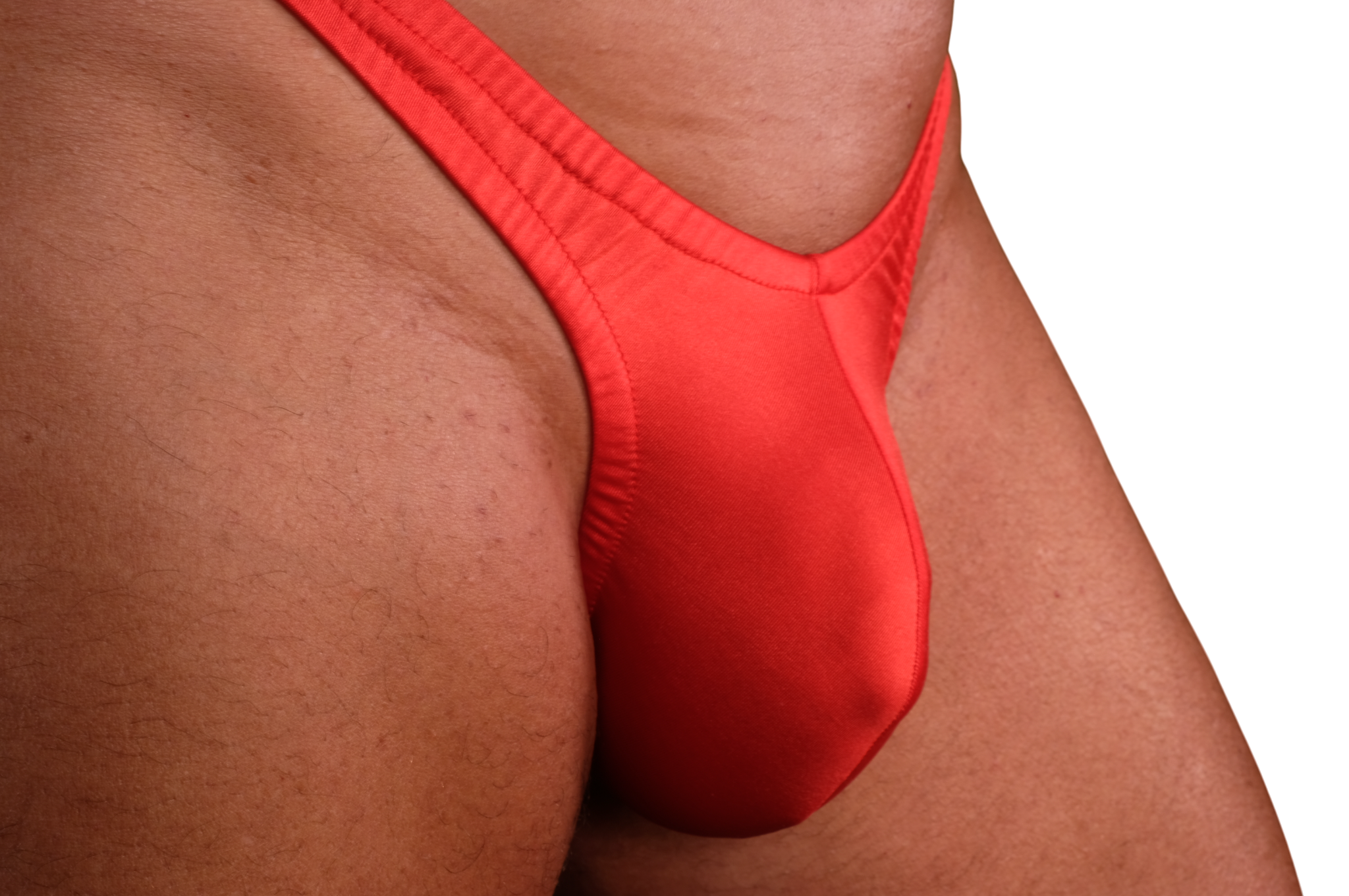
- Traditional spandex swim briefs: Classic Speedo-style designs with a supportive pouch and full rear coverage.
- Men’s bikini briefs: Lower-rise swimsuits with narrower sides and less fabric.
- String bikini swimsuits: Minimal side straps connecting the front and rear panels.
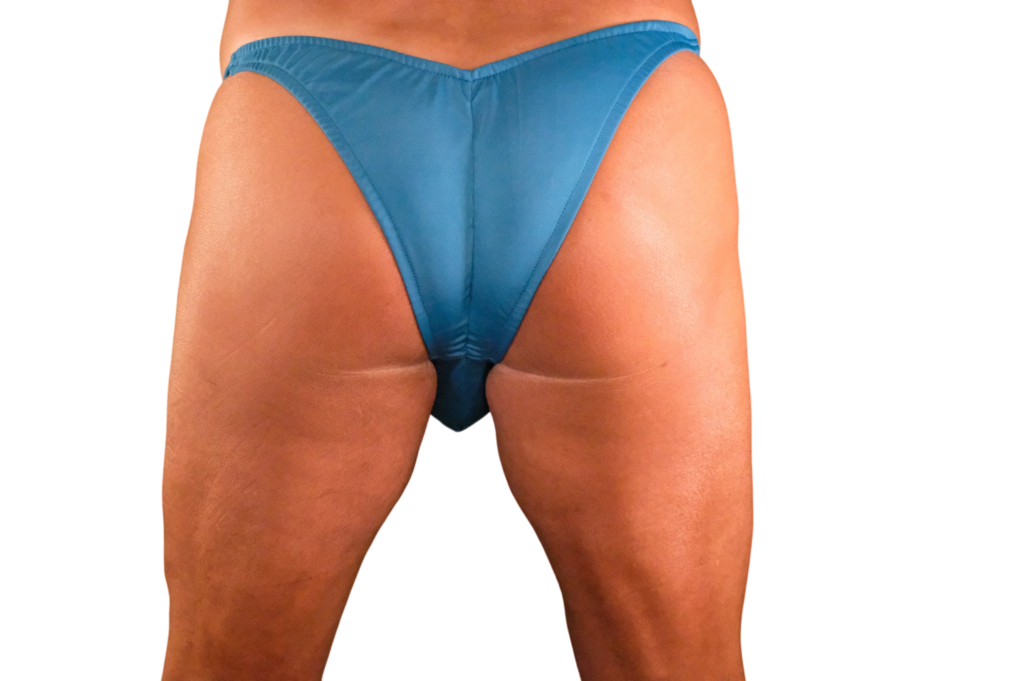
- Brazilian bikini briefs: Contoured designs with higher leg openings and reduced rear coverage.
- Micro bikini swimsuits: Tiny designs featuring very small front and rear panels.
- Ultra-micro bikini briefs: Specialized styles that reduce coverage even further.
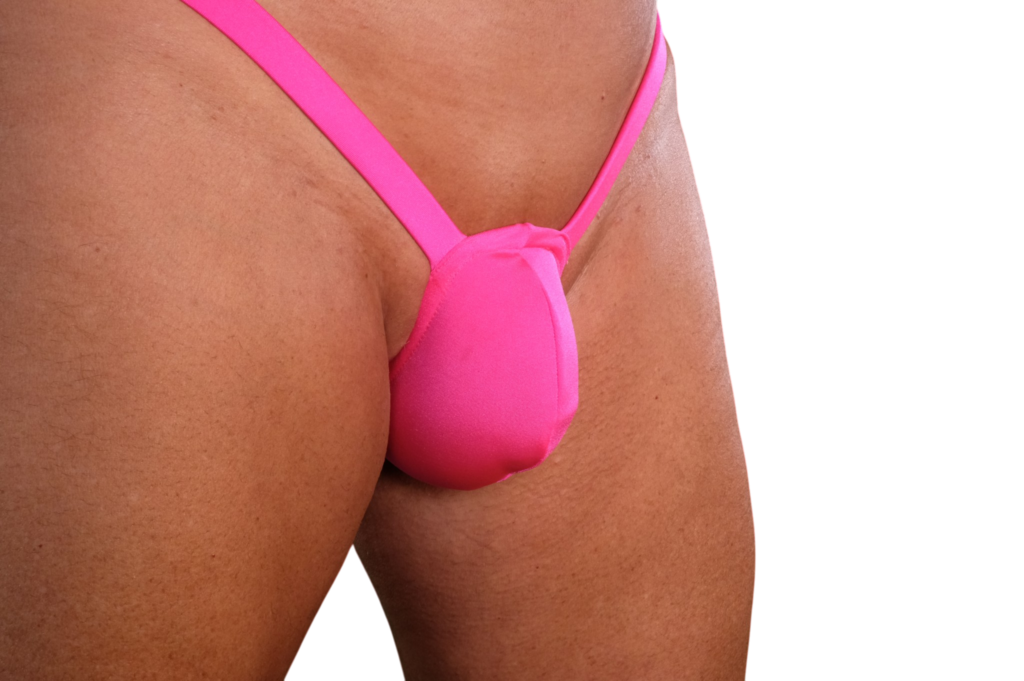
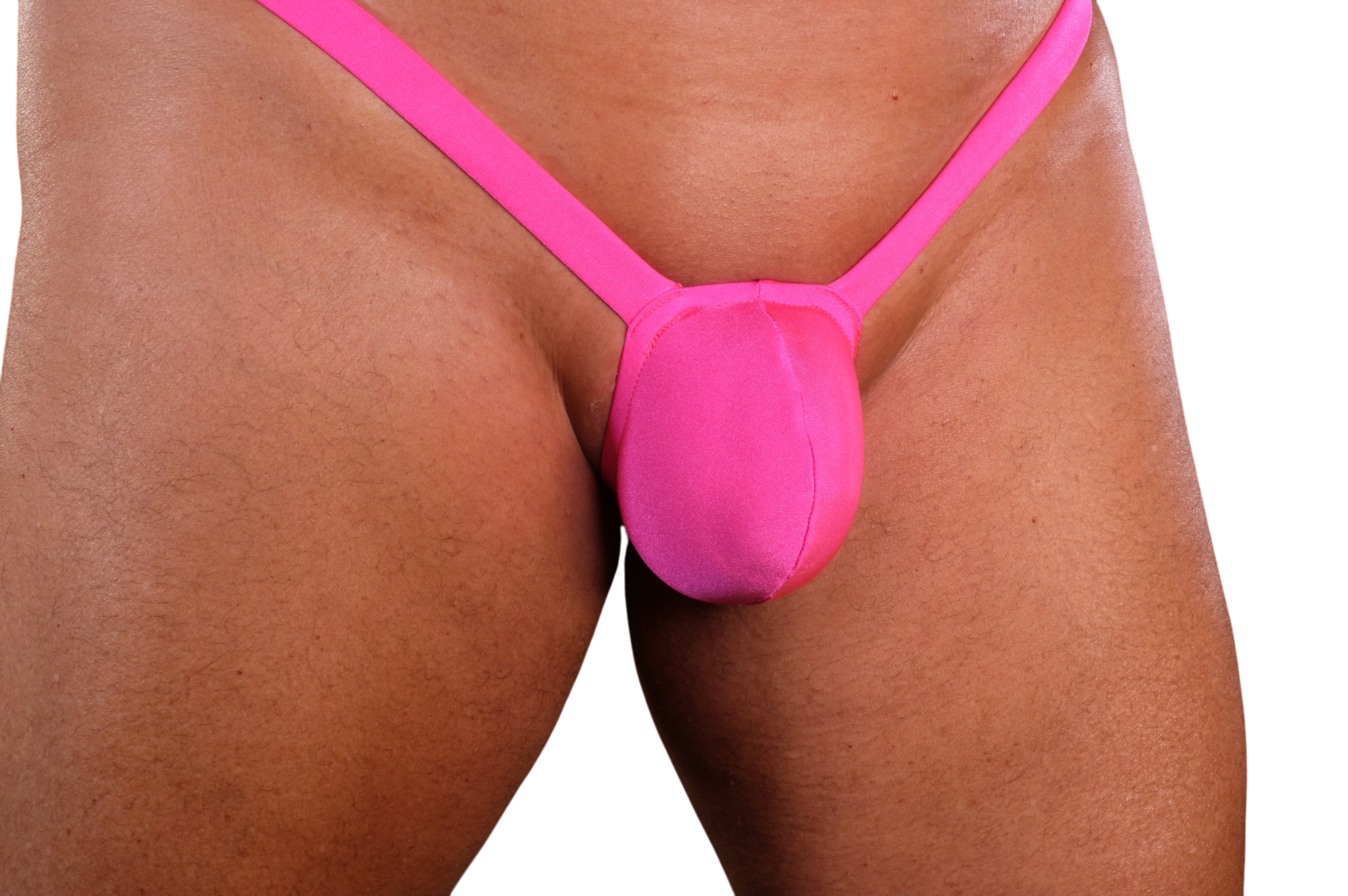
- Micro-pouch bikinis: Designs featuring particularly small or closely contoured front pouches.
- Gender-fluid and MTF bikinis: Swimwear designed to create a smoother, more feminine, or gender-neutral appearance.
Each style offers a different experience, but all share the appeal of fitted, stretchy swimwear.
The History of Men’s Spandex Bikini Swimwear
Men’s fitted swimwear is not a new invention.
For decades, swimmers around the world have worn brief-style swimsuits, particularly in competitive swimming and in beach cultures where smaller swimwear is considered normal.
The introduction of elastic synthetic fabrics helped transform swimsuit design during the twentieth century.
Earlier fitted swimsuits often relied on less flexible materials. With the widespread adoption of spandex blends, manufacturers could create lighter, stretchier, and more comfortable garments.
By the 1970s and 1980s, brief-style swimwear had become familiar in swimming competitions and recreational settings.
Speedo helped popularize the athletic swim brief, and other manufacturers began experimenting with lower waistlines, narrower sides, and more revealing designs.
During the 1980s and 1990s, men’s bikini swimsuits were especially visible in certain European beach communities, bodybuilding circles, and fashion-oriented markets.
However, American casual swimwear fashion moved in another direction.
Baggy board shorts became dominant, and many men grew accustomed to wearing swimsuits that extended to the knees.
For a period, even traditional swim briefs could seem unusually revealing in some American beach settings.
Today, specialty swimwear brands and online shopping have made fitted bikinis far more accessible to men interested in exploring smaller designs.
The selection now extends well beyond the conventional swim brief.
Why Men Are Choosing Spandex Bikini Swimwear
There are many reasons men prefer spandex bikinis over traditional swim trunks.
1. The comfort of stretch fabric
One of the biggest advantages of spandex is its ability to move with the body.
A properly fitted bikini swimsuit stretches when walking, swimming, bending, or relaxing.
Unlike loose trunks, there is no excess material bunching around the thighs or floating in the water.
Many men find that once they become accustomed to wearing a bikini, they appreciate the simplicity of having less fabric.
2. A more streamlined appearance
Spandex bikinis closely follow the body’s contours.
They emphasize the hips, thighs, waistline, and natural silhouette without adding unnecessary bulk.
For men who enjoy fitted clothing, this sleek appearance is a major attraction.
3. Better tanning opportunities
Traditional swim trunks cover a large portion of the upper legs.
A bikini exposes much more skin, allowing for smaller tan lines.
Narrow-side and string bikinis reduce coverage even further.
Of course, exposed skin also requires appropriate sun protection.
4. Personal confidence
Wearing a small bikini in public can feel like a major step for someone accustomed to board shorts.
For some men, overcoming that initial nervousness becomes part of the appeal.
They discover that they can wear what they enjoy without allowing conventional fashion expectations to control their choices.
5. More fashion options
Modern men’s bikinis come in an enormous variety of colors, patterns, cuts, pouch shapes, and levels of coverage.
Men can choose athletic, masculine, feminine, playful, conservative, or extremely minimal designs.
This variety allows the swimsuit to become an expression of individual style.
Traditional Spandex Swim Briefs: Where Many Men Begin
For someone trying fitted men’s swimwear for the first time, the traditional spandex brief is often the perfect starting point.
A classic swim brief typically features a moderate-rise waistband, supportive front pouch, and full or nearly full rear coverage.
It provides a secure fit without the additional exposure associated with micro bikinis or thongs.
Speedo-style briefs are especially familiar in competitive swimming, but they also work well for recreational beach and pool use.
The traditional swim brief offers several advantages.
It is practical for swimming laps, provides support during movement, and is available in many colors and designs.
It can also help men become comfortable with the sensation of wearing less fabric.
Many enthusiasts begin with a traditional swim brief and gradually discover that they enjoy lower-rise bikinis and smaller cuts.
For these men, the classic brief is only the beginning.
Low-Rise Spandex Bikini Briefs for Men
Low-rise bikinis are among the most recognizable styles in modern men’s fitted swimwear.
Instead of sitting near the natural waistline, these designs rest lower on the hips.
The front panel is generally shorter, the sides are narrower, and the leg openings are cut higher.
This creates a sleek appearance that exposes more of the lower abdomen and upper thighs.
Low-rise bikinis are particularly appealing to men who want something smaller than a traditional swim brief without moving immediately into micro swimwear.
Some designs feature supportive contoured pouches, while others use flatter front panels.
The variety makes low-rise bikinis suitable for many different preferences and body types.
Narrow-Side Bikini Swimwear: Less Fabric, More Style
One of the easiest ways to make a men’s bikini smaller is to reduce the width of its side panels.
Traditional swim briefs may have several inches of material along the hips.
Narrow-side bikinis reduce that width considerably.
Some designs use sides approximately one inch wide, while others feature even narrower straps.
The effect is dramatic.
The swimsuit appears smaller, more revealing, and often more similar to the bikini styles traditionally marketed to women.
For men who enjoy minimal swimwear, narrow-side bikinis offer an excellent balance between conventional briefs and micro designs.
They also create smaller tan lines and allow more of the hips to remain exposed.
String Bikini Swimwear for Men
String bikinis take the narrow-side concept one step further.
Instead of fabric side panels, these swimsuits use thin straps to connect the front and rear sections.
The front pouch may be relatively conventional or extremely small.
The rear can range from full bikini coverage to a narrow Brazilian-style panel.
String bikinis appeal to men who appreciate lightweight swimwear and minimal material around the hips.
They can also create a more feminine appearance, depending on the cut and construction.
For many men, string bikinis represent the transition from traditional swimwear into the world of micro bikinis and ultra-minimal designs.
Brazilian Bikini Briefs for Men
Brazilian-cut bikinis offer a distinctive combination of high leg openings and reduced rear coverage.
These designs are inspired by swimwear styles associated with Brazilian beach fashion.
Rather than fully covering the buttocks, Brazilian bikinis often feature a narrower, more contoured rear panel.
They expose more skin than traditional briefs but generally provide more rear coverage than a thong.
This makes them attractive to men who want a revealing swimsuit without going to a full thong design.
Brazilian bikinis can be especially flattering because the higher leg openings create the appearance of longer legs.
They are also available in low-rise and narrow-side variations.
Micro Spandex Bikini Swimwear: The Next Level
For men who enjoy smaller swimsuits, micro bikinis offer an entirely different experience.
A micro bikini is designed to use substantially less fabric than a traditional brief.
The front pouch may be much smaller, the side straps narrower, and the rear coverage significantly reduced.
Some micro bikinis resemble tiny versions of conventional bikini briefs.
Others feature specialized pouch designs that emphasize or minimize the appearance of the male anatomy.
The appeal of micro swimwear is highly individual.
Some men enjoy the nearly weightless sensation of wearing so little fabric.
Others appreciate the bold appearance and minimal tan lines.
For some, micro swimwear represents the ultimate expression of confidence at the beach.
Specialty retailers such as Koalaswim.com offer men’s micro bikini designs that go well beyond the styles normally available in department stores.
Ultra-Micro Bikini Swimwear: How Small Can a Men’s Swimsuit Be?
Ultra-micro bikini swimwear takes the concept of minimal coverage to its practical limits.
These designs may feature extremely small front panels, narrow supporting straps, and very limited rear coverage.
Some are intended for specialized beachwear, private pools, adult-oriented resorts, or settings where highly revealing swimwear is permitted.
The construction of ultra-micro swimwear requires careful attention to fabric stretch and fit.
Because there is so little material, small differences in sizing can have a major effect on comfort and coverage.
A properly fitted ultra-micro bikini should remain secure without excessive pressure or uncomfortable pulling.
Not every ultra-micro design is suitable for swimming or public beach use. Some are primarily fashion or specialty garments.
Nevertheless, the availability of these designs demonstrates how far men’s bikini swimwear has expanded beyond traditional athletic briefs.
The Men’s Micro-Pouch Bikini Trend
One of the most specialized categories of men’s spandex swimwear involves the front pouch.
Traditional men’s swimsuits generally provide enough space to accommodate the genitals comfortably, sometimes with additional shaping to create a more prominent appearance.
Micro-pouch designs take a different approach.
Some feature small, closely contoured pouches intended for men with smaller anatomy.
Others are designed to create the visual impression of a reduced bulge.
The result can be a sleek, minimal front appearance that contrasts with the larger, more prominent pouches found in conventional men’s swimwear.
Small-pouch bikinis
These designs provide a smaller front panel without necessarily applying strong compression.
They can be especially useful for men who find standard pouches too loose or oversized.
Micro-bulge bikinis
Micro-bulge designs aim to create a small, closely fitted front profile.
They may use specialized shaping, stretch fabric, or gentle compression.
Pouch-only bikinis
Some specialty designs reduce the swimsuit to a small front pouch held in place by narrow straps.
These are among the most minimal forms of men’s swimwear.
Flat-front bikini briefs
Flat-front designs minimize the appearance of the penis and can create a smoother, more gender-neutral silhouette.
They are particularly appealing to men who prefer less traditionally masculine swimwear styling.
Regardless of the desired appearance, comfort and circulation should never be sacrificed to achieve a smaller pouch.
Feminine Spandex Bikini Swimwear for Men
Another interesting development in men’s swimwear is the increasing variety of feminine-inspired designs.
For years, women’s swimwear has offered an enormous selection of tiny bikinis, high-cut styles, string bottoms, and fashion-oriented silhouettes.
Men interested in similar designs historically had fewer choices.
Today, specialty manufacturers offer male-compatible swimwear that incorporates many of these feminine design elements.
A feminine-cut men’s bikini might feature a very low-rise front, narrow sides, high leg openings, and a rounded rear panel.
Other designs go further by reducing the visible male bulge or creating a smoother front.
These styles can appeal to feminine men, femboys, crossdressers, gender-fluid individuals, and anyone who enjoys softer or more feminine fashion.
Wearing feminine swimwear does not require a particular gender identity or sexual orientation.
It is simply another way to express personal style.
MTF Spandex Bikini Swimwear and Gender-Fluid Designs
Male-to-female swimwear is a specialized category intended for people who want a more feminine appearance while wearing a swimsuit.
Some MTF bikinis use compression and shaping to reduce the visible outline of the penis.
Others are constructed to accommodate tucking techniques.
Certain specialty designs also create the visual suggestion of feminine anatomy through fabric shaping.
These garments can be particularly valuable for transgender women, nonbinary people, and feminine-presenting men who prefer a smooth front silhouette.
Tucking bikini swimwear
Tucking-compatible bikinis provide support intended to hold the anatomy in a flatter position.
A well-designed garment can help create a smooth appearance beneath the swimsuit.
Tucking should be gentle and should never cause pain, numbness, or restricted circulation.
Gender-neutral bikinis
Gender-neutral designs avoid strongly emphasizing traditionally masculine or feminine anatomical features.
They may use small pouches, smooth fronts, and simple bikini cuts.
Feminizing swimwear
Feminizing designs use garment construction to create a more traditionally feminine visual appearance.
This may involve a lower front profile, narrower hip straps, or specialized shaping.
These styles expand the possibilities of what a men’s bikini swimsuit can look like.
Are Men’s Spandex Bikini Swimsuits Only for Gay Men?
One of the most persistent misconceptions about men’s bikini swimwear is that it is exclusively associated with gay men.
While gay beach communities have played an important role in popularizing revealing men’s swimwear, bikini briefs are not limited to any sexual orientation.
Straight men wear bikinis. Gay men wear bikinis. Bisexual men wear bikinis.
Some wear them for swimming, others for tanning, and still others because they enjoy the appearance and comfort.
In many parts of the world, fitted swim briefs are considered completely ordinary men’s swimwear.
The idea that wearing a bikini determines someone’s sexuality is simply an outdated stereotype.
A swimsuit is a clothing choice, not a statement of sexual orientation.
Spandex Bikini Swimwear for Every Body Type
Men sometimes believe they need a particular physique before wearing a bikini.
That is not true.
Spandex bikinis are available in designs that can accommodate many different body types.
Athletic men may prefer narrow-side or high-cut bikinis that emphasize the legs and hips.
Slim men may enjoy string bikinis or low-rise briefs that follow their natural silhouette.
Men with fuller bodies may appreciate supportive waistbands, well-proportioned pouches, and comfortable stretch fabrics.
Men with smaller anatomy may prefer compact pouch designs, while others may want additional room and support.
The goal is not to fit a particular body ideal.
The goal is to find a swimsuit that fits your body comfortably and reflects your personal taste.
Wearing a Spandex Bikini for the First Time
For many men, the first experience of wearing a bikini swimsuit in public is memorable.
Someone who has always worn long swim trunks may feel surprisingly exposed when switching to a small, fitted brief.
The difference can seem enormous.
Suddenly, the thighs are uncovered, the hips are more visible, and the swimsuit follows the body’s natural contours.
At first, this can create some nervousness.
However, many men find that the feeling becomes more familiar with repeated wear.
Starting with a traditional swim brief is often a practical approach.
Once that feels comfortable, a lower-rise bikini or narrow-side design may seem like a natural progression.
Some men enjoy trying their first bikini while traveling, particularly at beaches or resorts where fitted swimwear is common.
Others prefer starting at a private pool or a quiet beach.
The important thing is to choose a setting where the swimsuit is permitted and where you feel comfortable.
There is no need to move into smaller designs unless you genuinely want to.
Spandex Bikini Swimwear Around the World
Men’s swimwear preferences vary significantly by region.
In parts of Europe, traditional swim briefs and smaller bikini styles have long been familiar.
Countries such as France, Italy, Spain, and Greece have beach cultures where fitted men’s swimwear is widely recognized.
Brazil is also known for its fitted men’s beachwear, particularly the sunga, which typically provides more coverage than a micro bikini but less than many conventional shorts.
Australia has a strong tradition of fitted swim briefs associated with swimming and beach activities.
In the United States, board shorts and swim trunks remain common, but men can find fitted swimwear communities at many beaches, resorts, and swimming facilities.
Thong and micro bikini acceptance varies more widely, even in places where traditional swim briefs are normal.
Before wearing a very minimal design, it is wise to check local regulations and venue policies.
Choosing the Best Fabric for Men’s Spandex Bikinis
Fabric can make a significant difference in how a bikini fits, feels, and performs.
Most men’s fitted swimwear uses blends of nylon or polyester with elastane.
Nylon blends often provide a smooth, soft feel.
Polyester blends can offer good durability and resistance to fading.
Elastane supplies the stretch necessary for a close fit.
For swimming, look for fabrics that retain their shape when wet and provide sufficient coverage.
For tanning or lounging, lightweight materials may be especially appealing.
Micro bikinis often use thinner fabrics, but buyers should remember that some materials become more transparent when wet.
A swimsuit intended for public swimming should remain secure and provide the coverage required by the venue.
How to Find the Perfect Fit
The right fit is especially important with small bikinis.
A swimsuit that is too large may shift, wrinkle, or provide inadequate support.
A swimsuit that is too tight may cause discomfort, excessive pressure, or restricted movement.
When selecting a bikini, consider the waistband, side straps, front pouch, and rear coverage.
The waistband should stay securely in place without digging into the skin.
The front pouch should provide enough room for comfortable movement.
The rear should remain positioned as intended during walking and swimming.
With micro bikinis, accurate sizing becomes even more important because there is less fabric available to accommodate differences in body proportions.
Always consult the manufacturer’s measurements rather than assuming that every brand uses identical sizing.
Men’s Spandex Bikini Swimwear vs. Traditional Swim Trunks
| Feature | Spandex bikini briefs | Traditional swim trunks |
|---|---|---|
| Fit | Close-fitting | Usually loose |
| Fabric | Stretch synthetic blends | Varies, often woven synthetics |
| Coverage | Minimal to moderate | Moderate to extensive |
| Tan lines | Smaller | Larger |
| Swimming | Streamlined, little excess fabric | May create more drag |
| Fashion options | Athletic to ultra-micro | Mostly shorts-based |
| Front support | Built into fitted construction | Often uses a liner |
| Body silhouette | Closely follows contours | Conceals more of the body |
Neither style is automatically better for everyone.
The choice depends on personal preference, intended activities, comfort, and the setting.
Caring for Your Spandex Bikini Swimwear
Proper care helps preserve elasticity, color, and fit.
Rinse your swimsuit in cool fresh water after exposure to chlorine, saltwater, or sunscreen.
Hand wash delicate bikinis with mild detergent whenever practical.
Avoid bleach, excessive heat, and aggressive wringing.
Air drying is generally preferable to machine drying.
Very small bikini designs may have narrow straps and delicate seams, making gentle washing especially important.
Good care can help your favorite swimsuit maintain its original fit for many seasons.
Frequently Asked Questions About Men’s Spandex Bikini Swimwear
What is the difference between a swim brief and a bikini brief?
A traditional swim brief usually has wider sides, a higher rise, and more coverage. A bikini brief generally sits lower on the hips and uses narrower side panels.
Are men’s spandex bikinis comfortable?
Yes. A properly fitted bikini made from quality stretch fabric can be extremely comfortable. Comfort depends on the cut, pouch design, and correct sizing.
Can men wear bikinis at public beaches?
Generally, conventional men’s bikini briefs are permitted at many public beaches, but local laws and venue rules vary. Extremely small micro designs may not be appropriate or permitted everywhere.
Are men’s bikini swimsuits becoming more popular?
Specialty bikini styles are more accessible through online retailers and fashion communities. However, comprehensive market data is limited, so it is difficult to quantify the overall growth of men’s bikini swimwear.
What is the smallest men’s bikini available?
Ultra-micro and pouch-only designs offer some of the smallest coverage options. There is no universal industry standard defining the smallest bikini.
Can a man wear a feminine bikini swimsuit?
Absolutely. Feminine styling is a personal fashion preference. Some brands offer feminine-cut designs specifically constructed to accommodate male anatomy.
Are spandex bikinis suitable for swimming?
Many are. Traditional swim briefs and securely fitted bikinis are particularly practical. Some ultra-micro or fashion-oriented designs are better suited to lounging or tanning.
What is the best bikini for a first-time wearer?
A traditional swim brief or moderately low-rise bikini is usually a good starting point because it offers support and coverage while introducing the feeling of fitted swimwear.
The Future of Men’s Spandex Bikini Swimwear
The possibilities for men’s bikini swimwear continue to expand.
Specialty manufacturers are experimenting with smaller cuts, innovative pouch construction, different fabric textures, and designs that challenge conventional gender categories.
Micro-bulge swimwear offers an alternative to traditional prominent pouch styling.
Gender-fluid and MTF designs provide additional choices for people who prefer feminine or smooth-front silhouettes.
Ultra-micro bikinis and string designs push the boundaries of minimalist swimwear.
Meanwhile, traditional briefs and low-rise bikinis remain practical choices for swimming, exercise, and everyday beachwear.
Online retailers have made these specialized styles easier to discover, allowing men to explore options that may not be available in local stores.
Rather than replacing conventional swim trunks entirely, this expanding variety gives men more ways to express themselves.
Conclusion: Men’s Spandex Bikini Swimwear Is All About Freedom, Confidence, and Choice
Men’s spandex bikini swimwear represents one of the most versatile categories in modern beach fashion.
From classic athletic swim briefs to low-rise bikinis, narrow-side designs, Brazilian cuts, micro pouches, and ultra-micro swimsuits, the selection is remarkably diverse.
For some men, the perfect bikini is a comfortable, supportive swimsuit that performs well in the water.
For others, it is a tiny, revealing design that offers minimal tan lines and a bold appearance.
Still others appreciate feminine styling, gender-fluid fashion, or specialized swimwear that creates a smoother front profile.
There is no single correct way for a man to wear a bikini.
The most important change in men’s swimwear is the freedom to choose a design based on personal preference rather than outdated expectations about what men should wear.
A man does not need to be a competitive swimmer to enjoy a fitted brief. He does not need to be gay to wear a bikini. He does not need a perfect physique to wear a micro swimsuit. And he does not need to conform to traditional masculine styling if he prefers something more feminine.
The world of spandex bikini swimwear offers choices for all of these preferences.
For men who have never worn a bikini, trying one can open the door to a completely different swimwear experience.
For longtime bikini enthusiasts, the expanding selection of micro, ultra-micro, and specialty designs offers even more opportunities to experiment.
From the traditional Speedo-style brief to the smallest specialty bikini, men’s spandex swimwear is about comfort, confidence, individual expression, and enjoying the freedom to wear exactly what you like.
And with so many innovative designs now available, the traditional swim brief may be just the beginning of your journey into the exciting world of men’s bikini swimwear.